

Skip to content
Search

Latest Stories

A Former Dominatrix on the Power of Silence in Dating

A Former Dominatrix on the Power of Silence in Dating

Before I became a wife, I was a dominatrix. In my dungeon, I learned more about men than most women ever get to see. I saw what happens when their guard drops, and when the mask they wear for society comes off. So let me tell you that he truth shows up when you stop talking and start observing. Silence is a strategy. It is not cold. It is not manipulative. It is wise.


Silence isn’t about playing games, it is about holding your power. When I was dating, it was how I stopped wasting time on emotionally unavailable men. It was how I began dating from my center and not my wounds. It was how I stopped pouring myself into men who hadn’t earned my energy. And ultimately, it was how I attracted the man who became my husband.

So if you’re exhausted by dating and wondering why you keep attracting men who disappear, change up or drain your energy, I want you to lean into a new way of thinking. You don’t need to say more; you need to say less. Let me guide you. Read below to learn more about why silence is your most underestimated dating power.

@venuscuffs “Confessions from a Former Dominatrix.” Ladies, it’s time to harness the power of silence. If you are interested in consulting with me, visit venuscuffs.com and submit an inquiry. 🪩🥂 #datingadvice #venuscuffs #dating ♬ original sound - Venus Cuffs| YT & IG

Silence Reveals the Truth

Most women talk themselves out of clarityand will make excuses for men in the early stages of dating But here is the truth, honey. The less you speak, the more he shows you. When you stop filling the space, his actions become the message. If he wants to see you, he’ll make plans. If you go quiet and the connection fades, it was never real to begin with. If he wants to, he will. Allow his actions to do the talking. In the meantime, your silence lets you study his patterns,his consistency and his effort. Remember this if you remember nothing else: Words can lie, patterns don’t.

Oversharing Too Early Gives Away Your Power

I’ve watched so many women spill their entire life story on the first few dates. I’m talking childhood trauma, relationship history, insecurities and even financial struggles, because they feel like vulnerability is the path to connection. But all it does is hand over your personal blueprint to a man who hasn’t proven he’s safe with it. It may even be used against you if you aren’t careful.

When you give too much too soon, you give him the tools to manipulate your emotions. He now knows what to say to make you feel seen. He now knows what makes you tick. He knows exactly how to fool you to get what he wants from you.

Silence protects your emotional intimacy. It tells a man, “You need to earn access to the deeper parts of me.” That is power.

Silence Helps You Respond, Not React

When a man pulls away, flakes or sends mixed signals, most women panic. They reach out, asking what’s wrong. They try to repair something that hasn’t even been defined yet. That emotional chasing only creates a power imbalance, and you end up chasing someone who has proven they aren’t into you.

Instead, go silent. Learn the art of detachment, and put the focus back on yourself. When you pull back, you give yourself space to evaluate the situation clearly. Get quiet and observe him, because you are no longer reacting. You are now responding from a place of self-respect.

From my experience, what often happens is that he’ll start to chase, wondering, “What is she doing?.” Silence disrupts his expectations. You are no longer feeding the dynamic anymore. You are now unpredictable. That makes him realize he could actually lose you. If he’s serious, he’ll come correct. If he’s not, you just saved yourself months of confusion. Either way, honey, you win.

Mystery Creates Magnetism

Men are wired to pursue. If you offer up your entire life story too quickly — where you work, what you want, how your last three exes broke your heart — you've taken away the thrill of the chase. Your mystery is gone. You’ve made yourself emotionally available before he’s earned any of it. What does he have left to chase? Mystery isn’t about manipulation at all. It is about intentional and intelligent curation. Give him enough to be intrigued, but not so much that there’s nothing left to learn. He should earn the next layer of your story. Your life should unfold like a book he has to read, rather than a summary he can skim. Don’t cheapen your existence. You are the prize, so act like it! When you move with mystery, you give him a reason to lean in. To wonder. To show up with more intention.

Silence Is the Highest Form of Self-Respect

You don’t beg. You don’t chase. You go quiet. And again, for the ladies in the back, stop arguing. When you argue with men you lose your power. By arguing, they know they still emotionally have you right where they want you. Silence sends a clear message: I value my peace more than I value being chosen.

When someone disrespects you or starts pulling away, don’t match them by pulling away.Redirect that focus back onto yourself, because that’s how you keep your crown on straight. When you realize this is the best way to deal with men, you will start to feel foolish arguing with them.

Venus Cuffs is a relationship coach, event producer and former dominatrix from New York.

More For You

To The Parisian Gentleman: Do I Have to Thank ChatGPT?
Illustration created by Jenny Bee

To The Parisian Gentleman is a write-in advice column for matters of taste, decorum, and the spiritual condition of modern life. Our esteemed gentleman divides his time between Paris and the American South, where he has cultivated unimpugnable opinions on nearly everything. Submit your questions via DM or Paris@VextMagazine.com


To The Parisian Gentleman,


Dear Inconsiderate in Idaho,

We recently learned that "please" and "thank you" hold real monetary value in Silicon Valley, in the context of its new golden egg: Artificial Intelligence (AI). Tens of millions of dollars are spent fielding the courtesy people show to ChatGPT. Of course, the powers-that-be behind the technology were quick to defend the continued use of these words.

Why should one say "please" and "thank you"? The answer lies at the very essence of our so-called magic words. They are elemental components of an old idea: "graciousness." This idea can be defined as the various expressions of attention shown towards, and expected of, others. Graciousness is a sensibility, the awareness of awareness itself. Gratitude and an understanding of implication are its guiding spirit.

This notion is ancient, perhaps older than humanity itself. Archaeologists discovered evidence of ritualized burial among Neanderthals, bodies carefully covered in flower pollen—a gesture of gratitude transcending spoken language. The Greeks called this “xenia,” moral and spiritual imperatives governing hospitality. Myths tell of gods disguised as beggars rewarding those who showed courtesy, and punishing those who withheld it.

But we live in real, organic life, not in Ancient Greece, and not in the virtual world. Graciousness has been left to fester, its absence left unpunished, particularly in America and particularly amongst its new professional classes.

Graciousness, above all, is about intention. One must wish to be gracious in order to be so. Modern culture, pathological with its optimization and efficiency, treats every interaction as transactional. When we see others primarily as obstacles or tools, we practice a kind of casual dehumanization. These habits, once formed, shape all our interactions.

A prime example is how the upper-crusts treat wait-staff. Recently, at a friendly dinner in Paris, a new acquaintance refused to say "please" or "thank you". Instead, he snapped and waved dismissively. Even his tone was condescending. When pressed about his attitude, the offending party defended himself, even vaunting such disdain as a family trait. Zeus would not have been pleased.

With all of this in mind, shall I answer your question, Dear Reader? Should one say "please" and "thank you" to AI? In my opinion, yes. Resoundingly yes. Not because AI has feelings to hurt, but because we have habits to maintain and our humanity to carry. Gratitude is spiritually augmentative in its expression, irrespective of the ear upon which it lands.

In saying "please" and "thank you" to AI, we maintain, transmit and build upon the wisdom inherited from our forebearers. Each act of graciousness, each "please" and "thank you" offered sincerely, is a breath upon the flame keeping civilization alive, a flame whose very purpose is to remind us what it means to be human. AI, even if a simulation of intelligence, is still made in the mirror of our own. AI learns from example, as do people. The way we treat others is a mirror, and we are inviting that treatment back upon ourselves.

The question isn't whether AI deserves our courtesy, but whether we can afford to lose the practice of courtesy itself.

So yes, Inconsiderate in Idaho, your wife is right. You needn't thank the dishwasher - it's just metal and water pressure. But you do need to be the kind of person who would thank it, if it helped.

Submit your questions via DM or Carson@VextMagazine.com


Keep ReadingShow less
The Rise of D.I.Y. Botox and Fillers
Photo via Shutterstock/AtlasStudio

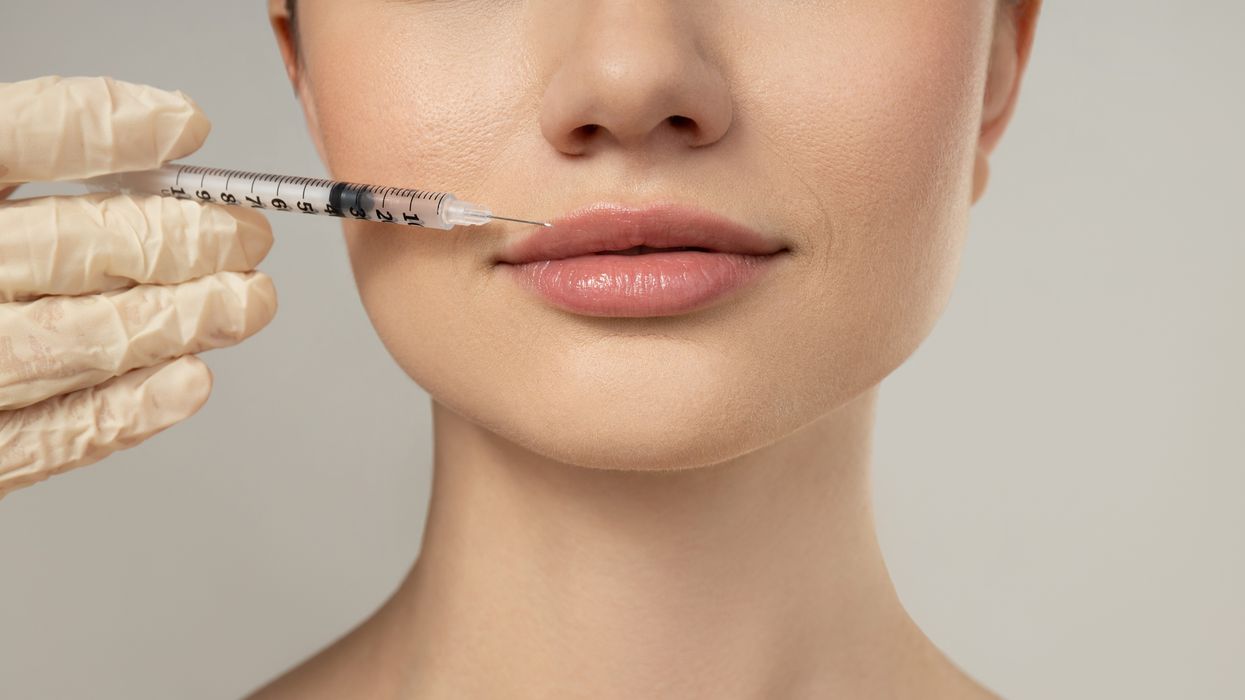
It’s a quiet Friday night, and Kirstin is busy setting up her injection station. Laid out on a tray for easy access, she places an alcohol wipe and a tube of lidocaine cream next to a box containing a small syringe of cosmetic dermal filler. She takes another look in the mirror and studies her face while testing out the plunger, doing a few tiny passes onto the tray before placing the needle to her lips. “It is a bit nerve-wracking, of course,” the 24-year-old says while detailing her first-time experience. “But overall, I’m thrilled with my results.”

Kirstin isn’t a doctor or a nurse, but she is part of a growing number of people doing at-home cosmetic injectables. Through social media, they teach each other how to perform procedures typically done in doctors’ offices and licensed medical spas. They swap tips, share product recommendations and talk about their own experiences. They ask ChatGPT for advice and discuss Trump’s tariffs affecting the cost of South Korean imports. And with the help of facial anatomy charts, fake practice lips and YouTube demonstrations, they fill, aspirate and inject before posting their results online.

Keep ReadingShow less
Niia's "Throw My Head Out the Window" Teeters on the Edge of Control

Niia’s “Throw My Head Out the Window” opens with the wistful wail of a lone saxophone, its notes heavy with longing. Her voice drifts in like smoke, aching in the same register.

In the minimalist music video, she hangs her head out a car window and croons to the Los Angeles canyons. The track builds over skittering, dance-inflected production, her voice picking up momentum as the tension coils tighter in her delivery. It’s moody, striking and teetering on the edge of control, with a deep undercurrent of angst that hovers just above a scream. The bubble threatens to burst, but it never does. And that restraint is intentional.

Keep ReadingShow less
Reality TV Is Turning Us Into Armchair Psychologists
Illustration by Mark Paez

At the height of Love Island USA season 7, new episodes were only half the entertainment. As each one aired, the fun came with recapping, discussing and dissecting the Islanders’ every move on social media. But that conversation quickly went south, as some viewers began diagnosing contestants like Huda Mustafa with borderline personality disorder (BPD). As Mustafa’s relationship with Jeremiah Brown shifted from lovey-dovey moments to screaming call-outs, more and more people piled on with amateur commentary. And in the era of armchair psychology, Love Island contestants aren't the only reality stars under this kind of scrutiny.

With social media breeding a new kind of fan culture around surveillance-based reality shows like Love Is Blind, Big Brother, The Ultimatum and Love Island, a different entertainment experience has emerged. Audiences don’t just watch people on reality shows anymore; they try to diagnose them.

Keep ReadingShow less
ChatGPT Psychosis in the Age of AI Companionship
Illustration by Mark Paez

It often starts innocently enough, with late-night chats about philosophy, deep dives into simulation theory or musings on the nature of consciousness. But for a small number of users, these exchanges with AI chatbots can take a darker turn. As tools like ChatGPT become more embedded into everyday life, mental health professionals are sounding the alarm about a rare but troubling new phenomenon. It's what some are now calling "ChatGPT psychosis," where AI interaction may intensify or trigger psychotic symptoms.

While there’s still no official diagnosis and the evidence remains anecdotal, these kinds of stories continue to pop up across the internet. On Reddit, users are sharing accounts of loved ones experiencing AI-associated delusions, often involving spiritual and supernatural fantasies. On X, prominent tech VC Geoff Lewis claims that he’s “the primary target of a non-governmental system,” beliefs that echo narratives commonly seen in persecutory delusions. Lewis stated that conversations with AI helped him uncover or “map” this supposed conspiracy, though it's unclear whether these beliefs preceded or followed his AI interactions.

Keep ReadingShow less