
I was in line at Chipotle, checking my bank account balance to see if I should get out of line, when my song came on the radio. It was something that would've made any other artist's day, but I was more excited that I had just enough for a burrito bowl — without the fajita veggies that would give me a butterfly rash.
Music doesn’t pay at all, unless it pays very well, and I was never really paid. I also have coronary artery spasms from Prinzmetal Angina — a rare and expensive form of heart disease — and earlier that day, I got a text from the pharmacy. My nitroglycerin spray was ready, and I’m not supposed to go into the world without this heart disease equivalent to an epi-pen. Without it, I could die, but I didn’t have the $400 to pick it up. Because in America, if you’re poor and sick, survival means constantly begging for help and praying that enough people say yes. And so I opened up OnlyFans and typed out a message that I was now taking custom requests.
I’m far from the only sex worker who needs to do that. OnlyFans has become a necessary option for many disabled and chronically ill creators who don't have family money to fall back on, offering one of the few flexible income streams that can work around their bodies and conditions. For me, disability benefits don’t cover all of my required treatment, drug and constant testing expenses. Medicaid doesn’t know what Prinzmetal is. They also don’t know why we keep looking at my heart, even though having a less-than-normal amount of blood flow means we have to. And before they’ll cover anything that might be useful, I have to try first-line treatments before they’ll authorize anything else, and many of them can be dangerous. Yet, I still have to pay for it all.
I started doing porn after going to a full moon party where I talked to a girl about having chronic illness and being poor, which is different than being broke, since you can’t call your dad for help. I’d recently left my record label – the details belong to someone else’s story — but it was a situation in which I had felt the need to do the right thing, take a stand or, at least, step aside from complicity. It’s an impulse I’ve resented because, without it, I’d probably have more money. Or at the very least, health insurance. So when the girl told me how much she made in a month on OnlyFans, I was floored. That could pay for a cardiac MRI and rent, all in the same month.
GoFundMe is groaning under the weight of medical pleas from sex workers like me. When you don’t have a safety net – no family money, no partner or friends who aren’t also financially struggling themselves – your viewers become your last hope. I’m always trying to come up with new creative ways to fundraise, and each one chips away at my dignity. I’ve sold things that mean a lot to me just to see the doctor. Once, I had a garage sale and found a Reddit thread calling me a “scam artist” and accusing me of faking my illness. But when you’re hanging off the edge of a cliff and the American healthcare system and our ableist, social Darwinist form of capitalism are trying to pry your fingers off one by one, you don’t have a ton of options. It feels like the world wants you to fall quietly.
In Chipotle, I was quickly trying to calculate the sales tax on a kids’ meal, when I checked my phone and was flooded with relief. A music charity covered the cost of my nitro, which meant I wouldn’t have to make some wild video and act like I was into it. I was already exhausted from the angina — the chest pains from when the heart isn’t getting enough blood or oxygen — which you usually associate with the elderly, and not someone getting comments about having “the body of a teenager.” It’s strange, because I remembered being in the ICU once, watching a Viagra commercial, and assuming I would never have sex again. I couldn’t even walk to the bathroom on my own. I had no idea I’d be doing porn to stay out of a hospital bed because, honestly, nothing makes you less horny than angina.
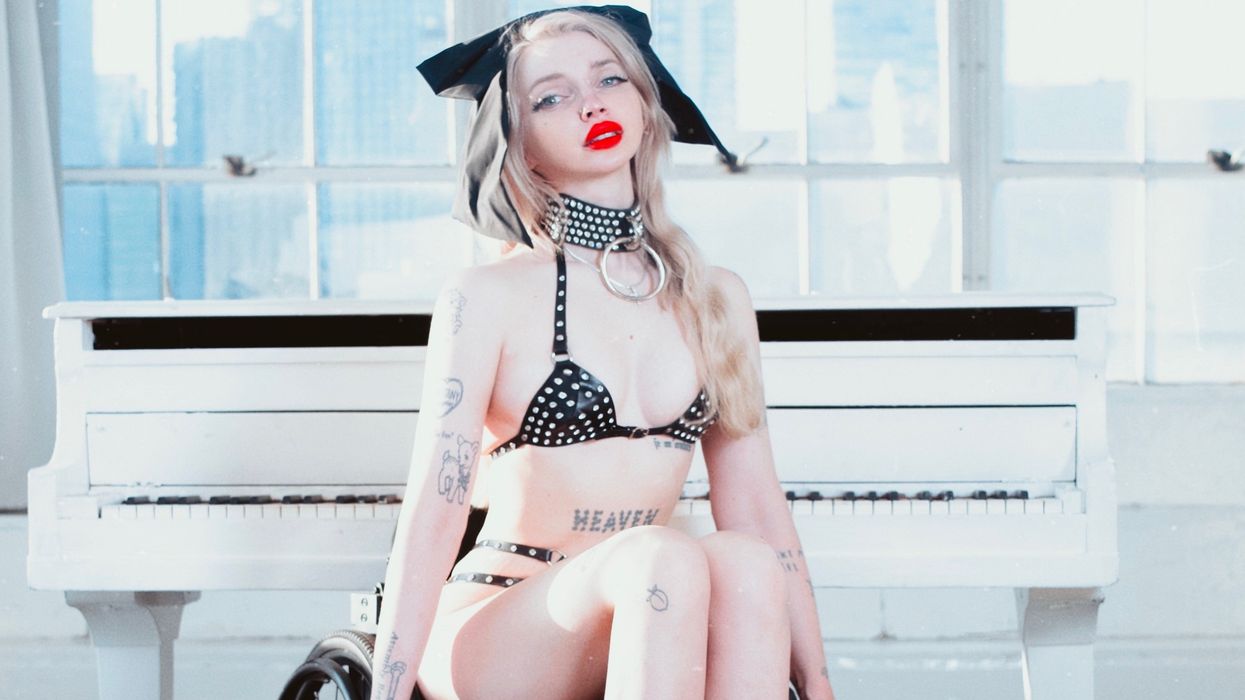
An artery spasm leaves you with a literal heartache afterwards, even if the nitro stops it in time. I’ve dragged my way to the sex toy drawer with leaden arms and made videos, gasping for air but making it look like pleasure. In a private chat once, I told a guy that I had angina. He asked if I had any friends I could 69 with. It’s like the world wants to pretend disabled people don’t have sex, until someone pays to fetishize us. And OnlyFans is one of the few places where I get to decide how I’m seen, even if it doesn’t always feel like I’m in control.
In their responses to solo videos, people often ask, “What are you thinking about?” It’s natural, the voyeur wanting to dream of what’s inside you, clothes and mind alike. Except, if I’m being honest, my own fantasies are wholesome. When I’m thinking freely, I’m horny for laying in the grass or drifting in a row boat reciting “Lady Of Shalott” like Anne of Green Gables. I want to be reading poetry in a garden, or the courtyard of an old building, light and clouds passing, the smell of old marble and new rain. But what I have to type is that I want to have two men inside me at the same time, while thinking about the inevitable UTI.
What also makes the porn-for-medical bills life interesting is how similar it is to "normal" jobs in service, sales, and marketing — just more explicit. Looking turned on because your life depends on it is like being told to have a “positive attitude” in the face of negativity and entitlement. You have to have a constant string of dissociative moments rooted in toxic positivity, a series of petite morts without true orgasmic release, just to keep your job. Yet when the alternative to these faked little deaths is actual death, we embody the spirit and give it our all. So when I press send and my picture is set free for a price, I’m just another person selling a fictional version of themselves in order to live.
I trained in ballet my entire life to be impressive, not broken. I worked so hard so that my dream would come true. I had the same vibrato as Judy Garland; I could tap dance like Ginger Rogers; and I could write an album in a week if I focused. But I never fantasized about clout or being famous. Rather, fame just seemed like a concession, the exposure you put up with if you wanted your art to reach people. Exposure – sure. But I certainly never expected that part of my fame would come from porn.
I love life. I can find a way to be happy in the worst of times, and I like being here. But when you’re sick, disabled and poor, it’s easy to start believing something’s wrong with you, because everyone treats your pain like “noise.” People scroll past my GoFundMes the same way they roll up their windows through Downtown L.A. They offer empty truisms about not forcing things and letting the universe flow. But if I let go, I’d be dead. Staying alive is the most unnatural, effortful thing I’ve ever done. Some days, it’s hard not to wonder if I was ever meant to be here at all.
Back in the line at Chipotle, the woman behind me cleared her throat. I locked my phone quickly on a picture of my ass and stepped forward.
Viola Odette Harlow is a musician, writer and sex worker based in Los Angeles, CA.